Cart
0

There is a reason newborns settle the moment they are wrapped up snugly. For nine months, your baby lived in a warm, gently confined space. A good swaddle brings a little of that comfort back, which is why so many parents reach for it in those first unsettled weeks.
If you are a first-time parent, swaddling can feel intimidating. The blanket never seems to stay put, and you worry about wrapping too tight or not tight enough. The good news is that swaddling is a simple skill, and once you have done it a few times it becomes second nature. This guide walks you through exactly how to swaddle a newborn, the safety rules that matter most, and the common mistakes worth avoiding.
What Is Swaddling?
Swaddling is the practice of wrapping a baby snugly in a thin, breathable blanket so that their arms stay gently secured against their body. The wrap is firm around the chest and arms but loose around the hips and legs.
The idea is to recreate the cosy, contained feeling of the womb. A well-swaddled baby feels held, which often helps them calm down faster and stay asleep longer during the newborn stage.
Why Swaddling Helps Your Newborn
Swaddling is more than a tradition. When done correctly, it offers real benefits in the first few months.
It calms the startle reflex. Newborns are born with the Moro reflex, a sudden jerking movement of the arms that can wake them mid-sleep. A snug swaddle keeps those little arms close, so your baby is less likely to startle themselves awake.
It can support longer sleep. Because the startle reflex is reduced, many swaddled babies drift back to sleep more easily between sleep cycles.
It soothes a fussy baby. That gentle, all-over pressure is comforting. Swaddling is a useful tool when your baby is overstimulated or struggling to settle.
It helps with temperature comfort. A lightweight swaddle keeps your baby cosy without the loose blankets that are unsafe in a sleep space.
What You Need Before You Start
You only need a few things to swaddle well.
A swaddle blanket is the most important choice. Look for a large, thin, breathable fabric. Organic cotton muslin is a popular choice because it is soft, lightweight and airy, which matters in warm Indian weather where overheating is a genuine concern. A square blanket of roughly 100 by 100 cm gives you enough fabric to wrap a newborn securely.
You also want a flat, safe surface such as a changing table or bed, and ideally a calm baby. Swaddling a very upset baby is harder, so it can help to soothe them a little first.
How to Swaddle a Newborn: Step-by-Step
Follow these six steps. Lay everything out before you pick up your baby so the process stays smooth.
-
Create a diamond and fold the top corner. Spread the blanket on a flat surface in a diamond shape, with one corner pointing up. Fold the top corner down by about 15 to 20 cm to create a straight edge.
-
Position your baby. Place your baby face-up on the blanket, with their shoulders just below the folded edge and their head resting above it. The head always stays uncovered.
-
Wrap the first arm. Gently straighten your baby's right arm down along their side. Take the left side of the blanket, pull it snugly across the chest, and tuck the end under their back on the opposite side. The arm should be secured, the chest snug but not compressed.
-
Fold up the bottom. Lift the bottom corner of the blanket up over your baby's feet and toward their chest. Keep this part loose so the legs and hips can still move freely.
-
Wrap the second arm. Straighten the left arm down, take the right side of the blanket, and bring it across the body. Tuck the end snugly underneath your baby.
-
Check the fit. Make sure the swaddle is firm around the arms and chest but loose at the hips. The wrap should be secure enough to stay in place but not so tight that it restricts breathing or leg movement.
With a little practice, the whole sequence takes under a minute.
The Hip-Healthy Check
This is the single most important part of swaddling, so it deserves its own attention.
Your baby's legs should never be wrapped tightly together and pulled straight. Forcing the legs into a straight position can interfere with healthy hip development and is linked to a higher risk of hip dysplasia.
Instead, swaddle the lower body loosely. Your baby should be able to bend their knees up and out, into a natural frog-like position. A simple test: after swaddling, you should be able to slip your hand between the blanket and your baby's hips with room for the legs to move.
Swaddling Safety Rules Every Parent Should Know
Swaddling is safe when you follow a few clear rules.
Always place a swaddled baby on their back to sleep. Back sleeping is the safest position for every sleep, every time. A swaddled baby should never be put down on their side or stomach.
Get the tightness right. The swaddle should be snug around the arms but never tight across the chest. You should be able to fit two to three fingers between the blanket and your baby's chest so they can breathe and their lungs can expand freely.
Watch for overheating. A swaddled baby can get too warm, especially in hot weather. Signs of overheating include sweating, flushed cheeks, damp hair and rapid breathing. Dress your baby in light clothing under the swaddle and choose a breathable fabric.
Keep the face and head uncovered. The blanket should never come up over your baby's chin or head.
Make sure the swaddle is secure. A loose blanket that can come undone is a hazard in the sleep space. If the wrap keeps unravelling, it is too loose.
Common Swaddling Mistakes to Avoid
A quick checklist of what not to do:
-
Wrapping the legs tightly and straight, which is unsafe for the hips.
-
Making the chest wrap too tight, which restricts breathing.
-
Using a thick or fleecy blanket that can cause overheating.
-
Leaving the swaddle so loose it comes undone during sleep.
-
Continuing to swaddle once your baby shows signs of rolling over.
-
Covering the head or face with the blanket.
When to Stop Swaddling
Swaddling is meant for the newborn stage only. You should stop swaddling as soon as your baby shows any signs of trying to roll over, which often happens somewhere between two and four months, though it can be earlier.
Once a baby can roll, a swaddle that pins their arms makes it harder for them to reposition themselves, so it is time to transition out. Many parents move to a sleep sack at this stage, which keeps the cosy feeling while leaving the arms free. You can read more in our guide on when to stop swaddling and how to make the transition smoothly.
Choosing the Right Swaddle
The fabric you choose makes a real difference to how easy swaddling feels and how comfortable your baby stays.
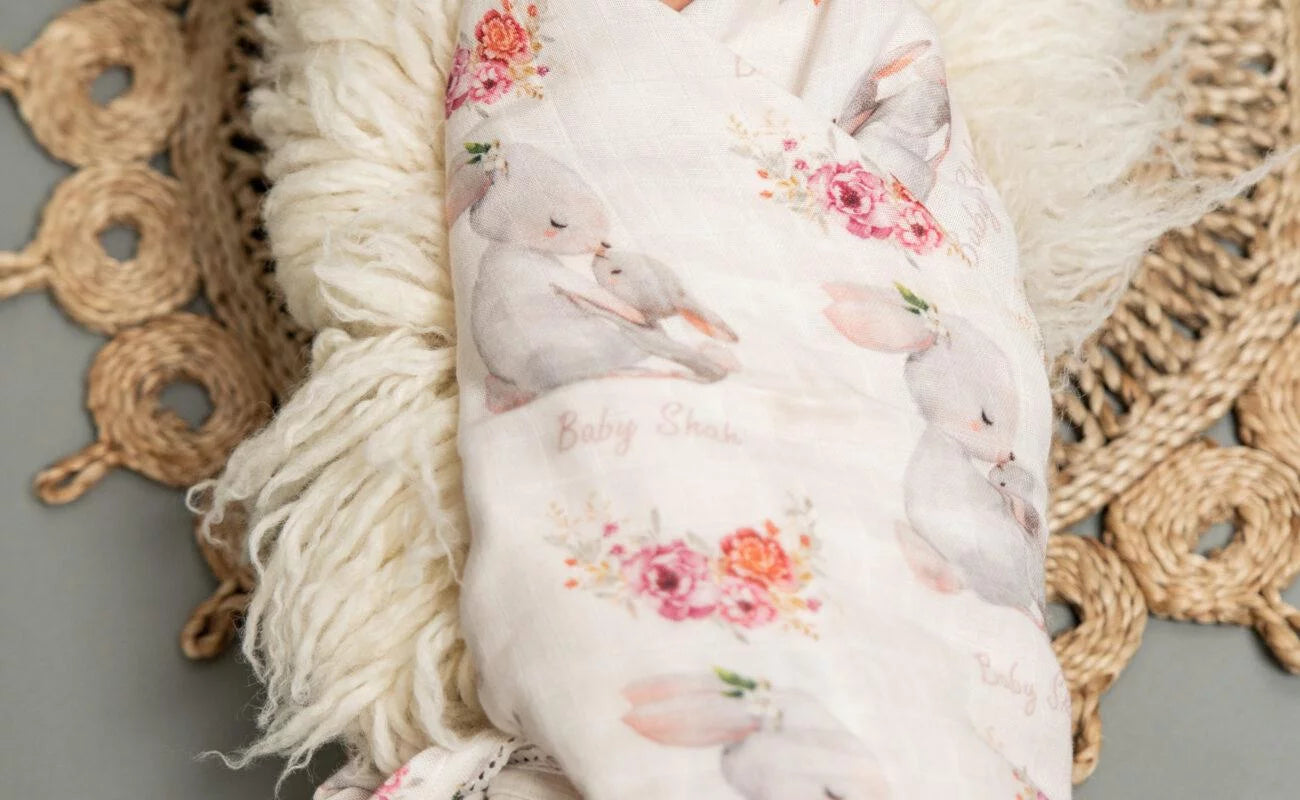
Soft organic cotton muslin is hard to beat. It is breathable, gentle on delicate newborn skin, and grows softer with every wash. It is also generously sized, which makes wrapping easier and more secure. If you would like a fabric that keeps your baby cosy without the risk of overheating, explore our organic muslin swaddle collection, thoughtfully designed for newborns and made for everyday comfort.
Frequently Asked Questions
How tight should a swaddle be? Firm around the arms and chest, loose around the hips. You should be able to fit two to three fingers between the blanket and your baby's chest, and your baby should be able to bend their legs freely.
Can I swaddle my baby for naps as well as night sleep? Yes. As long as you follow safe-sleep rules and your baby is not yet rolling, you can swaddle for both naps and night-time sleep.
Should a baby's arms be in or out of the swaddle? For newborns, arms are usually swaddled in to calm the startle reflex. As your baby gets older, some parents move to an arms-out style before stopping swaddling altogether.
Is it safe to swaddle in hot weather? Yes, if you use a lightweight, breathable fabric like cotton muslin and dress your baby in minimal clothing underneath. Watch for signs of overheating and keep the room comfortably cool.
What if my baby does not like being swaddled? Some babies resist swaddling, and that is perfectly normal. You can try an arms-out style or a sleep sack instead. Swaddling is a helpful tool, not a requirement.
Final Thoughts
Swaddling is one of the simplest ways to help your newborn feel calm and secure in those first unsettled weeks. The technique takes only a few tries to master, and once you have the fit right, firm around the arms, loose around the hips, on the back to sleep, you can trust it.
Choose a soft, breathable swaddle, follow the safety rules, and watch for the signs that it is time to move on. Your baby's comfort starts with the small, everyday choices, and a good swaddle is one of them.
Ready to find a swaddle your baby will love? Browse our organic muslin swaddles and newborn essentials, crafted with gentle, breathable fabrics for your little one's first months.